
Midwest Tree Disease & Pest Diagnostic Hub | QC Tree Pro
Early detection is the single most important factor in saving a matu
re tree or safely removing a hazardous one before it collapses. Throughout Illinois and the greater Midwest, native and ornamental trees face aggressive fungal pathogens, wood-boring insects, and invasive root threats.
Use this field diagnostic hub to identify symptoms early, understand regional quarantine rules, and determine whether your tree requires systemic treatment, sanitary pruning, or immediate crane-assisted removal.
4-Step Disease & Hazard Management Protocol
When dealing with infectious diseases or structurally compromised trees, QC Tree Pro implements a clear clinical process:
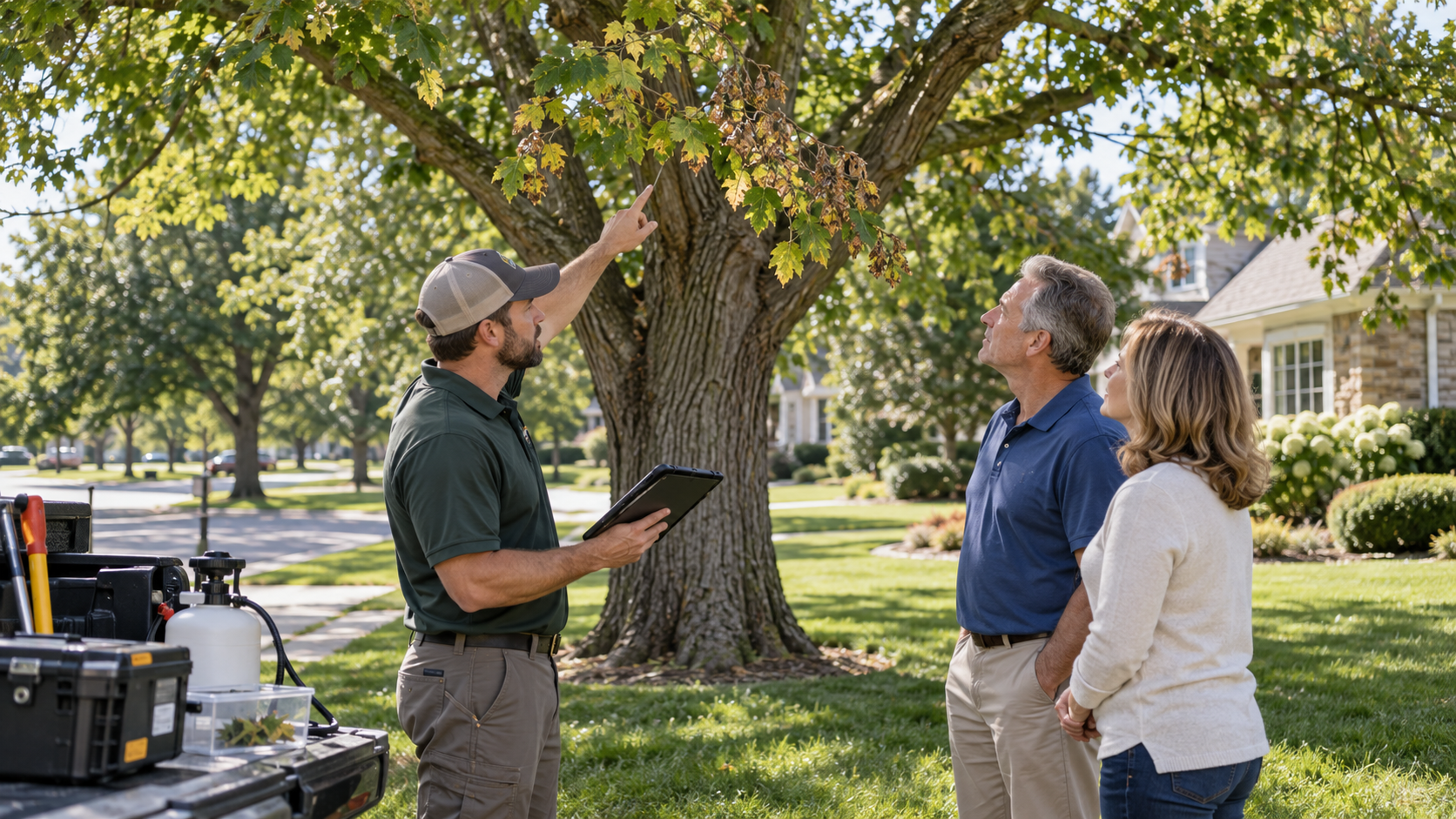
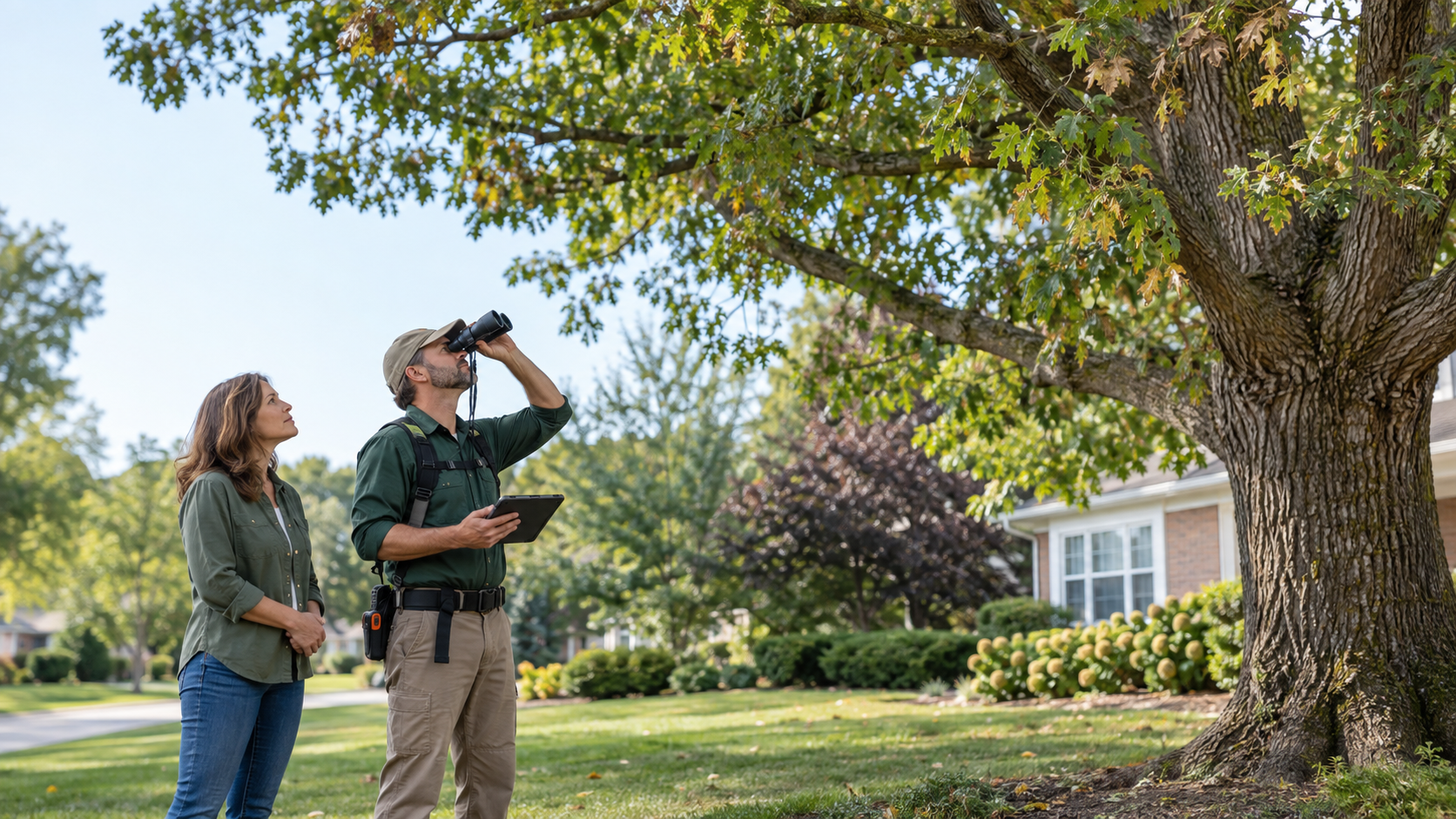
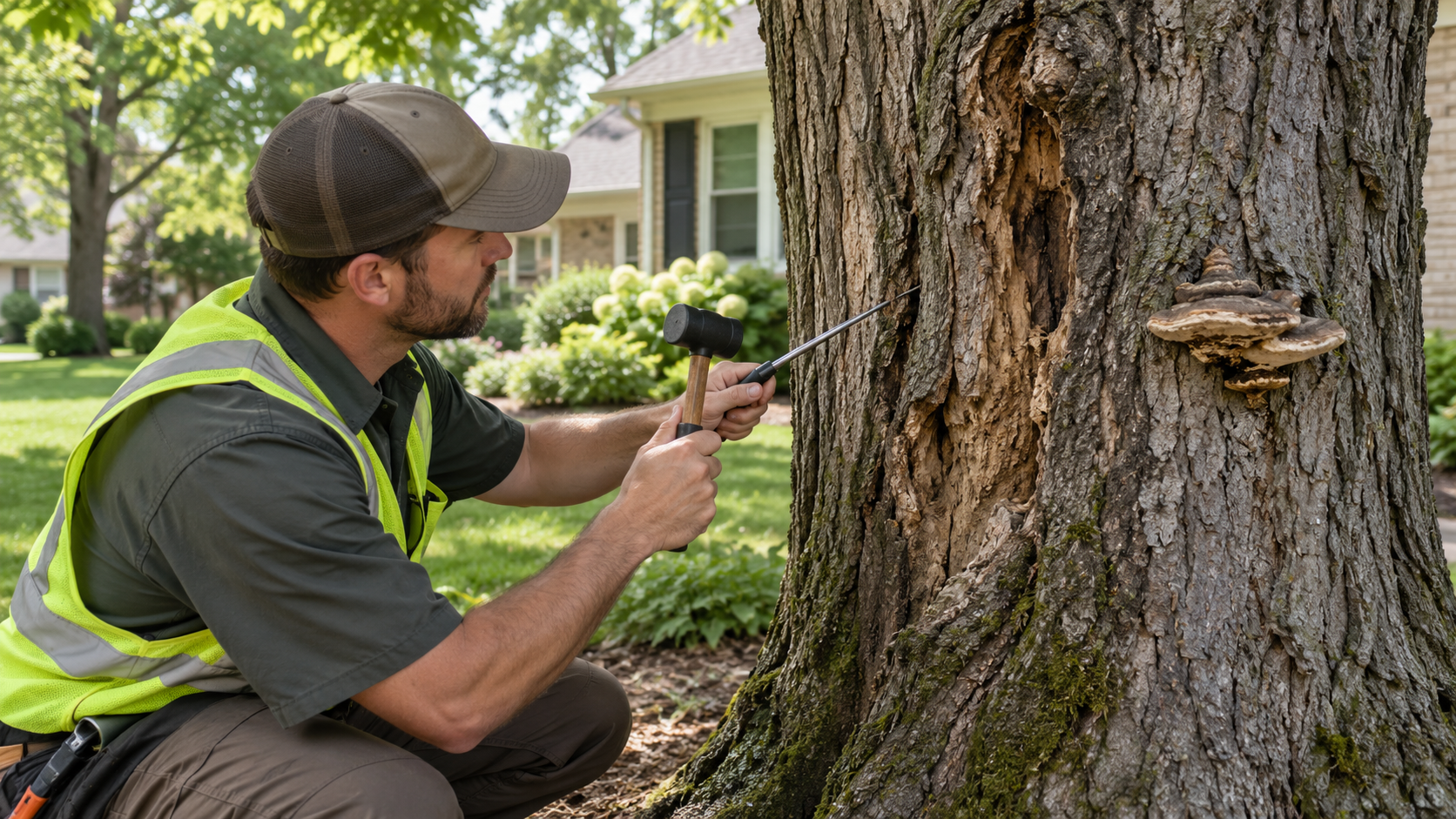
1) Clinical Diagnosis: We inspect branch architecture, bark integrity, root flares, and insect galleries to confirm the pathogen and determine the percentage of canopy viability.
2) Action Plan: If the tree can be saved, we recommend targeted pruning schedules and systemic micro-injections. If the tree is beyond recovery or poses a fall hazard to homes or utility lines, we engineer a removal strategy.
3) Sanitary Extraction: Infested wood is felled using low-impact rigging or crane picks to protect surrounding structures. Diseased wood is chipped or hauled away to prevent pest migration to neighboring trees.
4) Complete Stump Grinding: Leaving a diseased stump behind creates a persistent fungal spore reservoir and pest nesting site. We mechanically grind stumps from trees we cut down, as well as any existing stumps across your property, 4 to 8 inches below grade. This eliminates breeding sites for carpenter ants, termites, and root-rot fungi, allowing for immediate grading, replanting, or lawn restoration.

High-Threat Tree Diseases in Illinois & the Upper Midwest
1. Oak Wilt (Bretziella fagacearum)
Oak Wilt is a devastating fungal disease affecting all native oak species. Red oaks (pin oak, black oak, northern red oak) are particularly vulnerable and typically die within 3 to 6 weeks of symptom onset. White oaks (bur oak, swamp white oak, white oak) demonstrate higher resistance but will experience steady branch dieback.
-
Transmission: Fungal spores are carried by sap-feeding nitidulid beetles attracted to fresh pruning wounds, or transmitted underground through interconnected root systems (root grafts).
-
Key Symptoms: Leaves turn dull bronze or water-soaked brown starting at outer margins and drop rapidly while still partially green, completely defoliating the upper canopy in mid-summer.
-
Strict Pruning Window: Never prune, trim, or wound oak trees between April 1 and July 15 (and preferably not until after the first hard freeze in autumn) when sap-feeding beetles are active.
-
Recommended Action: Immediate trenching to sever shared root grafts, followed by removal of infected red oaks. High-value white oaks in the infection perimeter may be treated with systemic propiconazole trunk injections.
2. Emerald Ash Borer (EAB - Agrilus planipennis)
This invasive metallic-green beetle has killed tens of millions of ash trees across Illinois. The larvae feed on the inner phloem and cambium layer, carving winding, S-shaped feeding galleries that cut off water and nutrient transport.
-
Key Symptoms: Dieback starting in the upper third of the canopy, heavy woodpecker activity ("flecking" or light patches on bark), vertical trunk splits, vigorous sprouts (epicormic suckers) emerging from the lower trunk, and distinct 1/8-inch D-shaped exit holes.
-
The Structural Hazard: Dead ash trees lose moisture rapidly. The wood becomes brittle, making them unpredictable hazards that can shatter or drop massive limbs without warning during light wind. Standard climbing techniques are often unsafe, requiring bucket trucks or crane picks.
-
Recommended Action: If more than 30–50% of the canopy is dead, the tree cannot be saved and requires prompt removal. If caught early, preventative emamectin benzoate trunk micro-injections can protect healthy ash trees for 2–3 years per treatment.
3. Bur Oak Blight (BOB - Tubakia iowensis)
A late-season fungal pathogen that specifically targets bur oaks (Quercus macrocarpa). BOB attacks the petioles (leaf stems), causing vascular damage that leaves dead foliage clinging to branches throughout the winter.
-
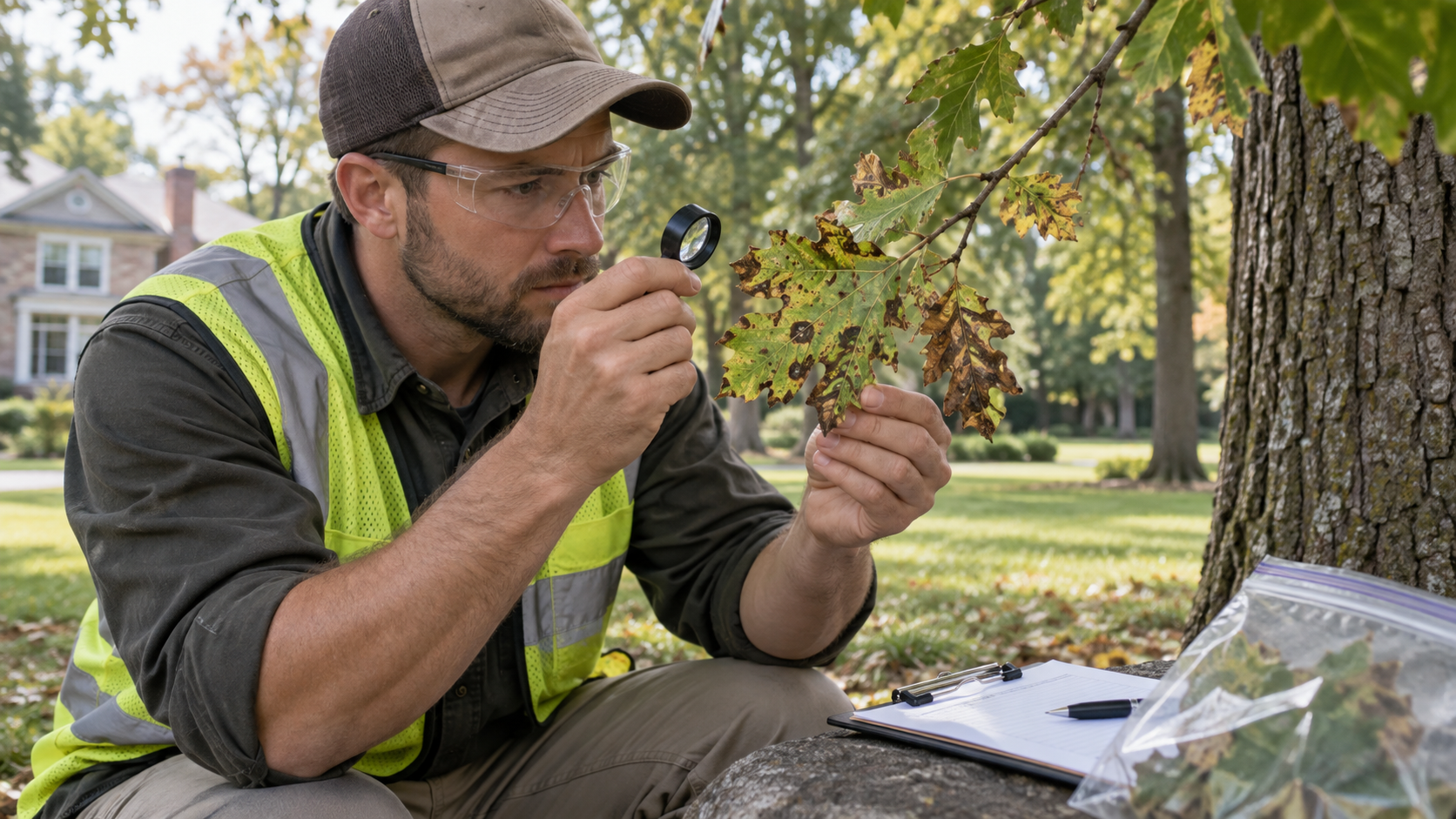
Key Symptoms: Black necrotic lesions on the underside of leaf veins forming a wedge-shaped or V-shaped brown patch; symptoms intensify in August and September; diseased leaves remain attached through winter rather than falling.
-
Long-Term Impact: Repeated defoliation drains the tree’s carbohydrate reserves, predisposing the oak to secondary invaders like the two-lined chestnut borer and Armillaria root rot.
-
Recommended Action: Targeted micro-injections of systemic fungicides applied by certified applicators in late spring just after full leaf expansion.
4. Dutch Elm Disease (DED)
A vascular wilt fungus spread by native and European elm bark beetles. The fungus causes the tree's vascular system to plug itself with tyloses to stop the spread, ultimately starving the canopy of water.
-
Key Symptoms: Individual upper branches suddenly turn yellow, wilt, and turn brown ("flagging") in late spring or summer. Peeling back the bark on wilted branches reveals brown streaking in the sapwood.
-
Recommended Action: Rapid sanitary pruning if the infection is isolated to less than 5% of the canopy; systemic trunk injections for valuable specimen elms; immediate felling and debarking/chipping of infected wood to eliminate breeding habitat for bark beetles.
Invasive Species Elimination: Clearing the Understory
Healthy woodlands depend on eliminating invasive woody shrubs that outcompete native hardwood saplings and harbor insect pests:
-
European & Glossy Buckthorn (Rhamnus cathartica): Aggressive, small trees that leaf out early and retain leaves late into autumn. Their roots release emodin, an allelopathic compound that suppresses native plant growth.
-
Amur & Tartarian Honeysuckle (Lonicera maackii): Dense multi-stemmed shrubs forming impenetrable thickets in woodlands, driving out native wildflowers, oak seedlings, and valuable timber species.
-
Eradication Protocol: We combine mechanical forestry mulching with direct cut-stump applications of systemic triclopyr or glyphosate to prevent aggressive stump suckering.
Our 5-Step Emergency Tree Removal Process
Visual Tree Symptom & Diagnostic Guide: What Is Harming Your Tree?
Unusual leaf discoloration, dead branches, or holes in the bark are early warning signs of serious infestation or disease. Use this visual guide to identify what is damaging your trees and determine how quickly you need professional intervention.
🔴 Critical Hazard: Rapid Canopy Browning from the Top Down
-
Likely Threat: Oak Wilt (Bretziella fagacearum)
-
Species at Risk: Red Oak, Pin Oak, Black Oak, White Oak
-
Key Symptoms: Foliage turns a dull bronze or water-soaked brown starting along the outer edges, dropping rapidly in mid-summer while still partially green.
-
Why It’s Urgent: Oak Wilt is aggressive and lethal. In red oak varieties, it spreads underground through connected root grafts and can kill a mature tree in 3 to 6 weeks.
-
Immediate Action Required: Do not prune during spring or summer. Isolate root systems and contact our arborists immediately for diagnostic verification and containment.
🔴 Critical Hazard: D-Shaped Exit Holes & Upper Canopy Dieback
-
Likely Threat: Emerald Ash Borer (Agrilus planipennis)
-
Species at Risk: Green Ash, White Ash, Black Ash
-
Key Symptoms: 1/8-inch D-shaped exit holes through the bark, distinct vertical trunk splits, heavy woodpecker stripping ("flecking"), and canopy dieback starting at the crown.
-
Why It’s Urgent: Ash wood rapidly dries out and becomes dangerously brittle as larvae destroy the inner bark. Dead ash trees pose catastrophic falling hazards and cannot be safely climbed using standard tree gear.
-
Immediate Action Required: Trees with under 30% dieback may be saved with trunk micro-injections; severely compromised trees require immediate crane extraction.
🔴 Critical Hazard: Sudden "Flagging" (Single Dying Branch in Summer)
-
Likely Threat: Dutch Elm Disease (Ophiostoma novo-ulmi)
-
Species at Risk: American Elm, Red Elm, Winged Elm
-
Key Symptoms: A single upper branch suddenly wilts, turns bright yellow, and turns brown ("flagging") while the rest of the canopy appears healthy. Dark brown streaks appear beneath the bark.
-
Why It’s Urgent: Spread by elm bark beetles, this vascular fungus plugs the tree’s water channels, killing mature elms in a matter of weeks if left unchecked.
-
Immediate Action Required: Immediate sanitary pruning of the affected limbs if caught early, followed by systemic fungicide injections or safe removal.
🟠 High Urgency: Dense, Green Understory Choking Out Native Seedlings
-
Likely Threat: Invasive European Buckthorn & Bush Honeysuckle
-
Species at Risk: Native woodland understories, oak savannas, and forest borders
-
Key Symptoms: Thick, tangled multi-stemmed shrubs or small trees that leaf out weeks before native hardwoods and stay green late into November, completely blocking sunlight from the forest floor.
-
Why It’s Urgent: Buckthorn alters soil chemistry and prevents native oak and hickory saplings from regenerating, degrading wildlife habitat and devaluing private timberland.
-
Immediate Action Required: Mechanical forestry mulching followed by direct cut-stump herbicide application to destroy the root system permanently.
🟠 High Urgency: V-Shaped Brown Leaf Blight in Late Summer
-
Likely Threat: Bur Oak Blight (Tubakia iowensis)
-
Species at Risk: Bur Oak (Quercus macrocarpa)
-
Key Symptoms: Distinct wedge-shaped or V-shaped brown dead patches forming along leaf veins in late July and August. Severely diseased leaves remain clinging to branch tips throughout the winter.
-
Why It’s Urgent: Successive years of defoliation exhaust carbohydrate stores, leaving mature bur oaks vulnerable to fatal secondary pests like two-lined chestnut borers.
-
Immediate Action Required: Soil and trunk micro-injection treatments administered in spring to protect new foliage.
🟡 Low to Moderate: Distorted, Blackened Spring Leaves & Premature Drop
-
Likely Threat: Anthracnose (Fungal Leaf Blight)
-
Species at Risk: American Sycamore, London Planetree, Silver Maple, River Birch
-
Key Symptoms: Twisted, cupped, or paper-thin leaves with irregular brown or black dead spots along the leaf veins, often accompanied by heavy early-season leaf drop following cool, wet springs.
-
Why It’s Urgent: While unsightly and alarming, anthracnose rarely kills mature, healthy shade trees on its own. Trees typically produce a second flush of healthy leaves as summer weather warms and dries out.
-
Immediate Action Required: Rake and destroy fallen leaves to reduce overwintering spores; prune crowded interior canopies to promote sunlight and rapid air circulation.
Frequently Asked Questions
Does homeowners insurance cover the cost of emergency tree removal?
In most cases, if a tree falls on an insured structure—such as your house, garage, fence, or shed—your homeowner's insurance policy covers tree extraction, damage mitigation, and structural repairs (subject to your deductible). If a tree falls cleanly on your lawn without hitting a structure, coverage varies depending on whether it blocks an active driveway or handicap access ramp. We provide comprehensive documentation to support your claim.
What should I do while waiting for the emergency tree crew to arrive?
Evacuate any rooms directly underneath or adjacent to the fallen tree. If power lines are affected or pulled away from the meter box, stay at least 30 feet back and alert your local power provider immediately. Do not attempt to use a chainsaw on fallen timber under tension, as limbs can whip back with fatal force.
Can you remove a tree that has fallen on power lines?
If a tree is touching active power distribution lines, the local utility provider must cut the power and clear the lines before any private tree service can work on the tree. Once the electrical company deems the zone de-energized and safe, QC Tree Pro will extract the rest of the tree from your home and property.
Can you grind out old stumps while on-site for an emergency removal?
Yes. Our commercial stump grinders travel on our service trailers. Simply notify our crew lead, and we can inspect and grind both the emergency stump and any pre-existing stumps on your property before we leave.
Call QC Tree Pro for Immediate Emergency Dispatch
Do not risk your personal safety or allow storm damage to worsen. Contact QC Tree Pro right away for rapid, professional tree extraction and hazard mitigation.
Our Equipment at work


What Our Clients Say
Feedback from clients
and partners
June, 2026
“This is the space to share a review from one of your business's clients or customers.”
– Full Name
july, 2026
“This is the space to share a review from one of your business's clients or customers.”
– Full Name
Augist, 2026
“This is the space to share a review from one of your business's clients or customers.”
– Full Name